7 Common Mistakes in Polish Ancestry Search (and How to Avoid Them)
Most Polish ancestry searches don’t stall because someone gave up too early or didn’t care enough. They stall because of a handful of mistakes that are almost impossible to see coming the first time you make them — and that nearly everyone makes.
If you’ve spent a weekend scrolling through scanned records that turned out to be the wrong parish, or typed a town name into a database that swore it didn’t exist, you already know the feeling. Polish research is genuinely harder than tracing an American or British line. The records sit in three different languages. The borders moved. Your family’s surname was spelled one way by a priest in 1860, another way by a ship’s clerk in 1905, and a third way by whoever filled out the census in Chicago.
None of that means your family is unfindable. It usually means you’ve run into one of the predictable walls below. Here are the mistakes that most often send researchers in circles — and what to do instead.
Mistake 1: Starting Without an Exact Town of Origin
This is the big one, and it’s worth stating plainly: “born in Poland” is not enough information to begin research in Poland. Neither is a province, a region, or the nearest large city.
Polish records are organized at the parish and town level. Birth, marriage, and death records were kept by the local Catholic (or Jewish, Lutheran, or Orthodox) parish, and there is no national index you can search by surname (or there are volunteer-made indexes like Geneteka for some of them). If you don’t know the specific town, there is simply nowhere to look.
The trap most people fall into is anchoring on a single document — usually one with a place name that’s misspelled or vague — and treating it as gospel. A passenger manifest says “Posen,” and off they go searching the city of Poznań, when the family actually came from a village forty miles away in the surrounding province of the same name.
How to avoid it: Exhaust your North American sources before you ever look at a Polish record. Naturalization papers, passenger manifests, church baptism and marriage records, World War I and II draft cards, Social Security applications, and death certificates can all carry a town of origin — and they often disagree with each other. Gather all of them. When three documents point to the same place and one points somewhere else, you’ve learned something. The goal is a specific town, spelled as accurately as you can manage, before you cross the ocean.
Mistake 2: Trusting the English Spelling of Names and Places
Once you have a town, a second wall appears: the spelling you have is probably wrong, or at least not the spelling the records use.
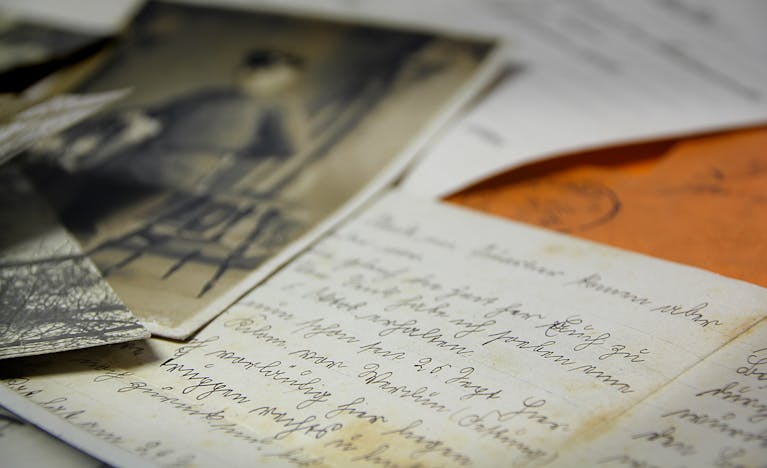
There are two layers to this. The first is your own family’s surname and given names, which were transcribed over and over by people who didn’t speak Polish. The Polish letter Ń got written as “EN,” the Ł became “W” or “L,” CH and CZ got swapped for each other, and accented vowels disappeared entirely. A family that was Wiśniewski in Poland might appear as Wisniewski, Visniewski, or Wishnewski in American records — sometimes all three within one family.
The second layer is the town name itself. During the period when Poland was partitioned (more on that next), most towns had an official German or Russian name alongside the Polish one. Sometimes the two are phonetically close — Człopa became Schloppe under Prussian administration. Sometimes they’re completely different — Wrocław was Breslau, Gdańsk was Danzig. If you search only the German spelling you found on an old map, you may never connect it to the Polish records.
How to avoid it: Search using correct Polish spelling, including the diacritical marks, whenever you can. Use a gazetteer to confirm the town actually existed and to find its historical names, and use a place-name converter like Kartenmeister to translate between German and Polish forms. Try phonetic variants and regional spelling conventions. Patience with spelling is not a nice-to-have here — it’s frequently the difference between finding a record and concluding, wrongly, that none survives.
Mistake 3: Forgetting That “Poland” Didn’t Exist for Over a Century
This is the mistake that most surprises people, and it shapes almost everything else about the search.
From 1795 to 1918, there was no Polish state. Polish territory was partitioned among three empires: Prussia (later Germany) in the west, Austria in the south, and Russia in the east. If your ancestor was born in the 1800s, they were technically a subject of one of those three powers, and their records were created within that empire’s system — its language, its forms, its administrative structure.
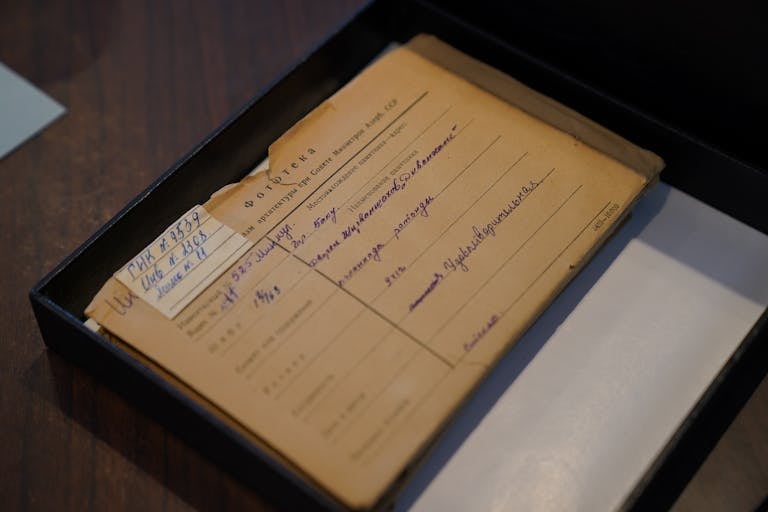
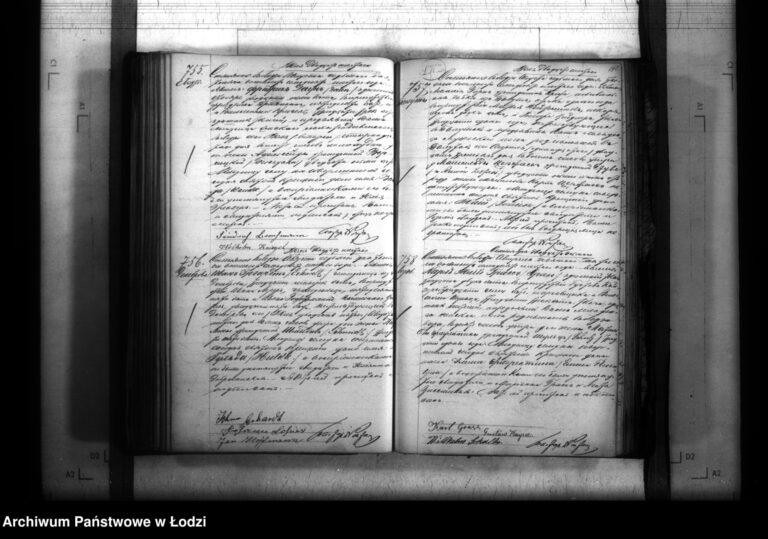
In practice, this means the records you need may be written in German, Russian, or Latin rather than Polish. A birth record from the Russian partition after the 1860s is likely in Russian, in Cyrillic script. A record from the Austrian partition is often in Latin or German. The handwriting is period script, not the print you’re used to. And because borders later shifted again, some of those towns now sit in Ukraine, Lithuania, or Belarus, with records held in those countries’ archives.
How to avoid it: Figure out which partition your ancestor’s town fell under, and during which years, before you go looking for records. That tells you what language and format to expect — and it’s an honest signal of how much paleography and translation the project will involve. Records in Russian, German, or Latin from the partition era are exactly where many do-it-yourself searches slow to a crawl, because reading them is a skill in itself.
Mistake 4: Expecting the Archive to Find Your Family for You
There’s a persistent and understandable myth that you can write to a Polish archive with your great-grandfather’s name and a rough date, and an archivist will locate him for you.
That isn’t how it works. Polish archives respond to specific requests: a named record type, from a named parish or registry office, within a range of years. The archivist is not going to search the surname across an entire region — and given how the records are organized, they couldn’t even if they wanted to. You supply the place and the specifics; the archive retrieves what matches.
How to avoid it: Treat the archive as the final step, not the first. By the time you’re submitting a query, you should already know the town, the parish, the partition, the likely language, and a target date range. Set realistic expectations about response times, too — archive correspondence moves on its own schedule, and not every parish book survived war, fire, and a century of upheaval.
Mistake 5: Treating a DNA Test as Proof of a Specific Line
DNA testing is a wonderful tool and a terrible shortcut. The mistake is asking it to do something it can’t.
An ethnicity estimate can tell you that a meaningful share of your DNA traces to a broad region. It cannot tell you which parish your great-great-grandmother was baptized in, or confirm that a particular Kowalski in the records is your Kowalski. Matches can point you toward relatives and suggest connections, but a match is a lead, not a proof.
How to avoid it: Use DNA the way a researcher uses any clue — to generate hypotheses and to confirm or rule out connections you’re already investigating. Then prove the actual line with documents. The paper trail is what holds up, whether you’re building a family tree or assembling evidence for a citizenship claim.
Mistake 6: Assuming Someone Has Already Done the Work Online
If your American ancestors arrived in the 1600s, there’s a decent chance a published genealogy or a well-indexed database already covers your line. If your family arrived from Poland one, two, or three generations ago, that’s far less likely — and assuming otherwise wastes time.
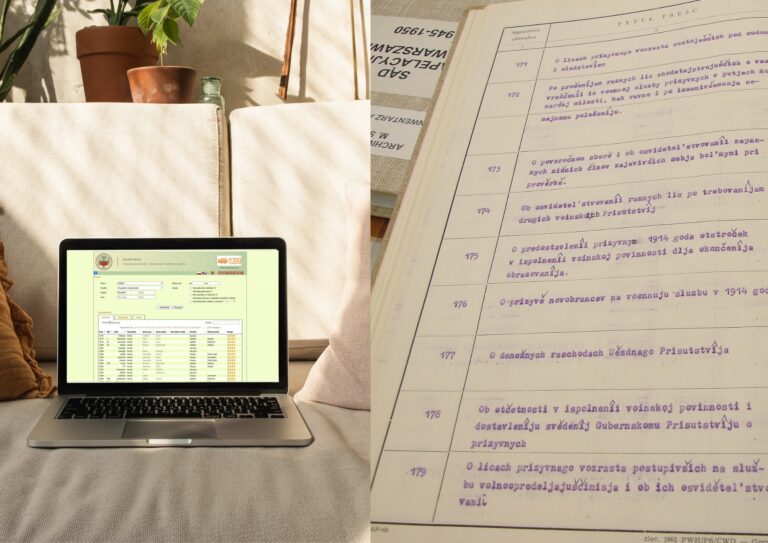
A great deal of Polish record material exists, but “exists” and “indexed and searchable from your couch” are very different things. Some parish books have been digitized and indexed by name. Many have been scanned but not indexed, meaning you have to read through them page by page. And plenty are still only available by request from a Polish archive. The internet has made Polish genealogy dramatically more accessible than it was twenty years ago, but it has not made it effortless.
How to avoid it: Learn the difference between what’s genuinely searchable online and what still requires manual reading or archive work. When you find an indexed database, use it — but understand that a “no results” there often means “not indexed yet,” not “no record exists.”
Mistake 7: Throwing Away the Small Details
Early in a search, it’s tempting to record only the essentials — name, date, place — and ignore everything else on a document. In Polish research, the “everything else” is often what cracks the case.
Polish vital records are rich with supporting detail: the names of witnesses, the occupation of the father, the godparents at a baptism, the ages and birthplaces of marriage partners, the neighbors who reported a death. Because surnames repeat so heavily and given names recur within families, those secondary details are frequently how you confirm that two records belong to the same person rather than two different men named Jan Nowak.
How to avoid it: Record everything, even when it seems irrelevant. The witness whose name means nothing today may turn out to be your ancestor’s brother, and the only thread that connects two parishes. Detail is cheap to capture now and expensive to recover later.
When It Makes Sense to Bring in Help
Plenty of Polish ancestry research can be done well by a careful amateur, and there’s real satisfaction in doing it yourself. But it’s worth being honest about where do-it-yourself research most often stops.
The walls tend to be the same ones: a town that can’t be pinned down from American records; partition-era records in Russian or German script that resist reading; a parish whose books were destroyed, where you need to know which substitute sources to try; or a family that fractures into a dozen identically named branches that have to be untangled record by record. These are the points where local knowledge, language skills, and familiarity with how Polish and partition-era archives actually work save weeks of effort — or recover a line that looked like a dead end.
If you’ve hit one of those walls, professional Polish genealogy research is a reasonable next step rather than an admission of defeat. (If you’d like to know who’s doing the research before you reach out, that’s a fair thing to check first.)
Frequently Asked Questions
Do I need to know the exact town in Poland before I start?
Eventually, yes. Polish records are kept locally, with no national surname index, so you need a specific town to know where to look. You don’t need it on day one — finding it is often the first phase of the project — but you can’t do meaningful research in Poland without it.
Why is my ancestor’s surname spelled differently in every record?
Because it was transcribed repeatedly by people who didn’t speak Polish, and because Polish letters and sounds don’t map cleanly onto English spelling. Treat spelling as flexible: search variants, watch for swapped letters like CH/CZ, and use the Polish form once you’ve identified it.
Which country’s archives hold my ancestor’s records?
It depends on which partition the town fell under during the relevant years — Prussian/German, Austrian, or Russian — and on where the town’s borders ended up after the 20th century. Some towns that were “Polish” then are in Ukraine, Lithuania, or Belarus now, with records held accordingly.
Can a DNA test alone trace my Polish family line?
No. DNA can confirm broad regional ancestry and surface relative matches that point you in useful directions, but proving a specific line — naming the people, the places, and the dates — requires documents.
How far back can Polish records go?
It varies by region and parish, but many Catholic parish registers survive into the 1700s, and some earlier. Survival is uneven: war, fire, and changing borders destroyed records in some places while leaving them intact in others.
The Takeaway
A Polish ancestry search rarely fails for lack of determination. It fails on the avoidable mistakes — the vague birthplace, the trusted-but-wrong spelling, the partition no one warned you about, the archive expected to do the searching. Avoid those, capture every detail, and treat DNA as a clue rather than a verdict, and you’ll get much further than most.
And when the trail runs into one of the harder walls — the unreadable record, the destroyed parish, the town that won’t resolve — that’s the moment to consider bringing in a professional researcher. Often it’s the difference between a line that stays stuck and one that finally opens up.