Polish Citizenship by Descent — Requirements & Eligibility: A Candid Guide
Who actually qualifies for Polish citizenship by descent? One rule decides most cases, and a few dates quietly disqualify people.
If you’ve spent an evening on law-firm websites, you’ve read some version of the same promising sentence: “Poland has no generational limit, so if you have a Polish ancestor you may be eligible for citizenship by descent.” That sentence is true. It is also doing a lot of quiet work to leave out the part that actually decides most cases.
What you’ll learn here:
- The principle everything hangs on, ius sanguinis, and what it means for your line
- Whether there really is no generational limit for Polish citizenship by descent
- Eligibility at a glance: parent, grandparent or great-grandparent, and how the odds change
- The dates that quietly disqualify people, including 1920 and January 19, 1951
- What an unbroken chain looks like in documents, and how to assess your own case
Table of Contents
Why this guide exists
If you’ve spent an evening on law-firm websites, you’ve probably read some version of the same promising sentence: “Poland has no generational limit — if you have a Polish ancestor, you may be eligible for citizenship by descent.”
That sentence is true. It’s also doing a lot of quiet work to leave out the part that actually decides most cases.
I’m Martyna — a genealogist based in Łódź, and a large share of the people who contact me are Polish-Americans trying to figure out whether they qualify for Polish citizenship by descent. So I see, week after week, the gap between “I have a Polish great-grandfather” and “I have an unbroken, documented chain of Polish citizenship from him to me.” That gap is where eligibility is really decided.
This guide is the thing I’d want a friend to read before they pay anyone — a lawyer or a genealogist — to start. One honest note up front: I’m a genealogist, not an immigration lawyer. I find and interpret the records that prove (or disprove) eligibility. For a binding legal opinion on a borderline case, you’ll still want a Polish citizenship lawyer. What follows is the practical, records-based reality of how eligibility actually works.
The one principle everything hangs on: ius sanguinis
Polish citizenship descends by blood, not by soil. The legal term is ius sanguinis — “right of blood.” It doesn’t matter where you were born, what passport you currently hold, or whether you’ve ever set foot in Poland. What matters is whether Polish citizenship passed, unbroken, from your Polish ancestor down each generation to you.
That word — unbroken — is the whole game. Citizenship by descent isn’t a reward for having Polish blood somewhere in the tree. It’s a chain. Every link has to hold. If your Polish ancestor lost their citizenship before the next person in line was born, the chain snapped there, and everyone downstream is — in the eyes of Polish law — not a citizen by descent, no matter how Polish the family feels.
So eligibility is really two questions stacked on top of each other:
1. Did your Polish ancestor have Polish citizenship to pass on?
2. Did they still have it at the moment each descendant in your line was born?
Most people can answer the first question easily. The second is where cases live or die.
Is there really no generational limit?
Yes — and this is the genuinely good news. Unlike some countries that cut you off at grandparents, Poland imposes no fixed generational cap. Eligibility can run back to a great-grandparent, a great-great-grandparent, or further, provided the chain stays unbroken the whole way down.
I’ve written a separate, detailed guide on the great-grandparent route, because that’s the most common starting point I see and it has its own quirks. The short version: more generations means more links in the chain, which means more documents to find and more places the chain can turn out to be broken. “No generational limit” is real, but each generation back roughly doubles the documentary work.
Eligibility at a glance: which ancestor are you starting from?
Here’s the practical lay of the land depending on your nearest Polish-born ancestor. Treat this as orientation, not a verdict — the dates in the next section can override any row here.
|
Your nearest Polish ancestor |
Typical difficulty |
What usually decides it |
|---|---|---|
|
Parent |
Most straightforward |
Whether the parent retained citizenship when you were born |
|
Grandparent |
Moderate |
The emigration/naturalization date of the grandparent |
|
Great-grandparent |
More complex |
Pre-1951 naturalization timing; military service gaps |
|
Great-great-grandparent |
Difficult but possible |
Surviving records back to the 1800s; every link documented |
Notice what the right-hand column keeps coming back to: not “having Polish ancestry,” but retention dates, naturalization timing, surviving records. That’s deliberate — eligibility turns on dates and documents, not on how Polish the family is.
The dates that quietly disqualify people
This is the part the cheerful marketing sentences skip, and it’s the single most important thing on this page. A few specific historical thresholds can break an otherwise perfect-looking chain.
Naturalization before 1951. Under Poland’s 1920 citizenship law, a Polish citizen who acquired a foreign citizenship generally lost their Polish citizenship in the process. So if your great-grandfather emigrated to the United States and naturalized as an American before your grandfather was born, he may have stopped being Polish at naturalization — and had no Polish citizenship left to pass down. The chain breaks there. The exact date he took the oath of US citizenship, relative to the birth dates of his children, is often the entire case.
Military service and the 1920 law. The same era’s rules tied citizenship to military obligations in ways that can cut both directions — sometimes preserving citizenship, sometimes complicating it. Men who served in a foreign army or evaded Polish service can have a messier status than the dates alone suggest.
Women and marriage, pre-1951. Under older law, a Polish woman who married a foreign citizen could lose her Polish citizenship through the marriage. If your line runs through a great-grandmother who married a non-Pole abroad before 1951, that’s a link worth scrutinizing carefully rather than assuming.
The 1951 reset. Polish citizenship law changed significantly in 1951, and again in 1962, and most recently in 2009. Events before and after these thresholds are judged under different rules. This is exactly why a genealogist or lawyer will always ask when your family left Poland before saying anything confident about eligibility — the same family story produces a different answer depending on whether the key events fall in 1925 or 1955.
None of this means a pre-1951 line is hopeless. Plenty qualify. It means the emigration and naturalization dates are not background colour — they are the case, and you can’t assess eligibility honestly without them.
What “unbroken chain” looks like in documents
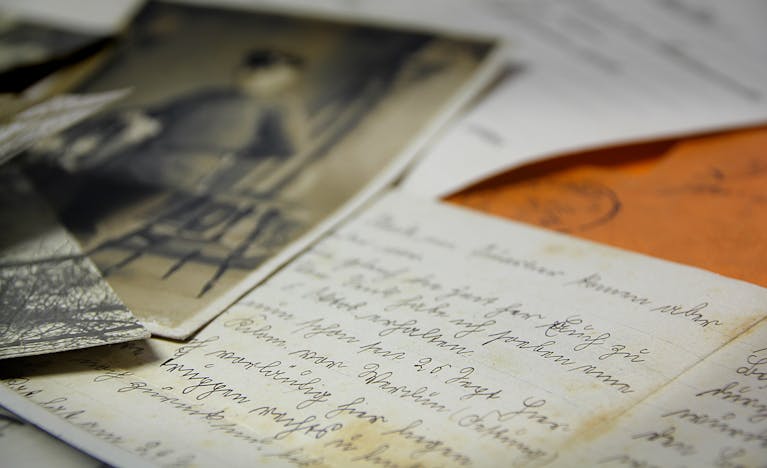
Abstractly, the chain is a sequence of births and the citizenship status of each parent at each birth. Concretely, it’s a stack of paper. To establish eligibility you generally need, for every generation from your Polish ancestor down to you:
– A birth record for each person in the direct line — ideally the Polish odpis zupełny (full copy) for the records held in Poland, because the short version omits details Polish authorities rely on. Learn how to find birth certificates in Poland from my other blog post.
– Marriage records that connect the generations and explain any name changes (essential when a maiden name shifts the paper trail).
– Evidence that the Polish ancestor held and retained Polish citizenship at the relevant time — a Polish passport is the gold standard, but military service records, residence registration (książeczka wojskowa, dowód osobisty, registration books), or voter records can all help.
– The ancestor’s foreign naturalization record (for Polish-Americans, the USCIS Certificate of Naturalization, plus the Declaration of Intention and Petition), because the date on it is what proves the chain stayed intact — or shows where it broke.
The full breakdown of every document, where each one lives, and the apostille and sworn-translation requirements, is in my companion article on the documents you need to gather. This guide is about whether you qualify; that one is about what you collect once you know you do.
One practical note that surprises people: the Polish-side records often have to be found in physical archives before any of this can be assessed, and foreign-language documents need a sworn translation by a tłumacz przysięgły to be accepted. Eligibility and document-gathering aren’t really separate steps — you frequently have to do the archival research to find out if you’re eligible at all.
How to actually assess your own eligibility
If you want to get a realistic read before spending money, work through this in order:
Identify your nearest Polish-born ancestor and roughly when they left Poland. Even an approximate decade matters, because it tells you which citizenship law era applies.
Find the naturalization date. For US lines, this is the make-or-break fact. Order the naturalization record from USCIS (or check census records, which from 1900 onward note naturalization status and year). Compare that date to the birth dates of their children. If a child in your direct line was born after the parent naturalized as a foreign citizen pre-1951, that’s the link to investigate hard.
Map the births in a straight line down to you. Parent of parent of parent — no aunts, no cousins, just the direct vertical line. Every one of those people needs a birth record eventually.
Flag the weak links. A great-grandmother who married abroad before 1951; an ancestor who naturalized early; a generation where you have a name but no record. Those are where a professional’s time is best spent.
If after that exercise your chain looks plausibly intact, you’re a strong candidate. If you’ve found a pre-1951 naturalization that lands before the next birth, don’t despair yet — there are nuances and exceptions a citizenship lawyer can sometimes work with — but go in clear-eyed.
A few honest cautions
I’d rather you hear these from me than discover them after paying a retainer.
Eligibility is not the same as a guarantee, and no honest professional can promise you citizenship from a family story alone. Anyone who quotes you a flat success-fee before seeing a single document is selling confidence, not analysis.
The records that decide eligibility are often the hardest ones to get — pre-1900 parish books, archive-held civil records, documents split across modern Poland, Ukraine, and Lithuania because of moving borders. The assessment is the research, much of the time.
And the timeline is long. Establishing eligibility, gathering legalized documents, and submitting to the voivode’s office or a consulate is measured in many months, sometimes well over a year. Patience is part of the requirement, even if it’s not written into any statute.
Where I fit in
What I do is the records half of this: finding the Polish birth, marriage, and citizenship documents that prove your chain, reading the 19th-century Russian, German, and Latin they’re written in, and telling you honestly whether the chain holds — including when it doesn’t. I don’t file applications or give legal opinions, but I find and interpret the evidence everything else depends on, and I’ll tell you early if I think your case needs a lawyer rather than (or alongside) a genealogist.
If you want a grounded read on whether your line is eligible, the most useful first step is usually a feasibility check: I look at what you have, search the relevant indexes and archives, and come back with whether the records to prove your chain plausibly exist. You can see how that works on my Polish genealogy research page — the preliminary check is built for exactly this question.
Tell me your nearest Polish ancestor, roughly when they left, and what documents you already have. I’ll come back with a real answer about where your chain stands — not a sales pitch.
FAQ
Who is eligible for Polish citizenship by descent?
Anyone who can document an unbroken chain of Polish citizenship from a Polish ancestor down to themselves. There’s no generational limit, but each person in the direct line must have been born while their Polish parent still held Polish citizenship. The deciding factor is usually whether and when an ancestor lost Polish citizenship — most often through foreign naturalization before 1951.
Is there a generational limit for Polish citizenship by descent?
No. Poland imposes no fixed cutoff — eligibility can trace back to a great-grandparent or further. The practical limit is documentary: the further back you go, the more records you need and the more links there are where the chain could be broken.
What can break the chain of Polish citizenship?
The most common chain-breaker is an ancestor naturalizing as a foreign citizen before 1951, which under the 1920 law generally caused loss of Polish citizenship. Other historical triggers include a woman losing citizenship by marrying a foreigner pre-1951, and certain military service situations. If the loss happened before the next person in your line was born, descendants after that point are generally not eligible by descent.
Do I need to speak Polish or live in Poland to be eligible?
No. Eligibility is based entirely on documented descent. You don’t need to speak Polish, live in Poland, or have ever visited. You do, however, need foreign-language documents translated by a sworn translator (tłumacz przysięgły) for the application.
How do I prove my ancestor kept their Polish citizenship?
A Polish passport is the strongest single proof, but it’s rarely available. In practice, citizenship is established through a combination of Polish birth and civil records, military service or residence registration documents, and — crucially — the absence of a disqualifying foreign naturalization before key birth dates. A genealogist can locate the Polish-side records; the foreign naturalization date you order from the relevant national authority (USCIS in the US).
Can a genealogist confirm whether I’m eligible?
A genealogist can find and interpret the records that determine eligibility — birth, marriage, citizenship, and naturalization documents — and tell you honestly whether your chain appears intact. For a binding legal determination on a borderline or contested case, you’ll also want a Polish citizenship lawyer. The two roles complement each other: the genealogist supplies the evidence, the lawyer renders the legal opinion and files.