The 100-Year Rule: Why Your Polish Birth Record Might Not Be Where You Expect
People come to me convinced they’ve done something wrong. They’ve searched Geneteka, searched Szukajwarchiwach, searched FamilySearch — and the record they need, a birth from 1921 or 1924, simply isn’t there. They assume it was lost, or that they’re searching badly. Usually neither is true. The record exists, it’s perfectly safe, and it’s sitting in a municipal office that won’t let just anyone see it.
That office is the USC, and the reason you can’t find the record online has a name: the 100-year rule. It’s the single most common source of confusion I see in citizenship cases, because it sends people hunting in exactly the wrong place. Here’s how it actually works, and what it means if you need that record for a Polish passport.
Two Doors: the USC and the Archive
Polish vital records live in one of two places, and which one depends entirely on age.
Recent records are held by the Urząd Stanu Cywilnego — the USC, the civil registry office in the municipality where the event was registered. Older records move to the Archiwum Państwowe, the state archive. The dividing line is 100 years for births. (Marriages and deaths cross over sooner — around 80 years.) Until a birth record passes that line, it stays in the USC, and the USC is not a research archive. It’s a working government office with strict rules about who may see what.
So when your 1923 birth record isn’t in any online database, it’s not missing. It’s just behind the first door, not the second — and the first door has a lock on it.
The Detail Almost Everyone Gets Wrong
Here’s where even careful researchers trip, because the rule isn’t as clean as “100 years and it’s public.”
Records aren’t transferred one at a time. They’re transferred by the volume — the whole bound book. And a book is only eligible to move to the archive once every record inside it has passed the threshold. A birth register covering 1910 to 1925 doesn’t go anywhere until the youngest entry in it clears 100 years. That means a book like that becomes eligible only around 2026 — and until then, a birth from 1911 in that volume stays in the USC, locked together with its younger neighbours, even though on its own it’s well over a century old.
This is why the math people do in their heads (“born 1920, so it’s public in 2020”) so often fails them. The record’s own age isn’t what matters. The age of the youngest record sharing its book is. I’ve watched people give up on a record that was genuinely retrievable, simply because they assumed it should have been online and it wasn’t.
Who the USC Will Actually Talk To
If your record is still in the USC, you can’t browse it the way you’d browse an archive scan. Access to records inside the protection window is restricted to close family who can prove the relationship — typically a direct descendant, with documentation showing the line from you back to the person on the record, plus identification.
This is a real wall for diaspora families, and not because the rules are unreasonable. It’s because the paperwork has to connect, in a chain the office will accept, and that chain is often exactly what you’re still trying to build. There’s a chicken-and-egg quality to it: you need the record to prove the descent, and you need to prove the descent to get the record.
Why a Scan From the Internet Won’t Do
Even when people do locate a recent record, there’s a second trap waiting, and it’s the one that derails citizenship applications.
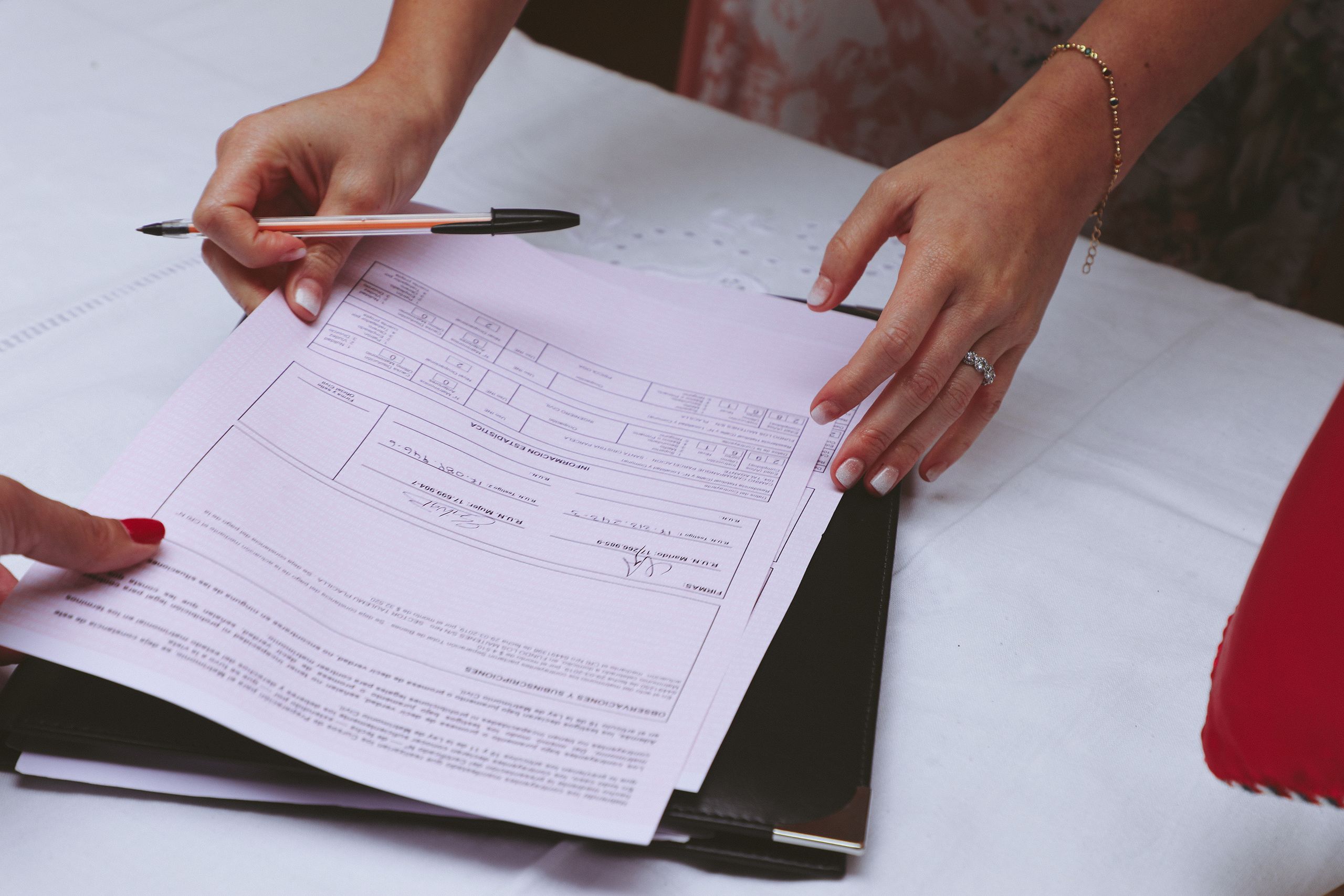
For a Polish citizenship-by-descent case, the authorities don’t want a screenshot, a database printout, or a photo of a page. They want an odpis zupełny — a full certified copy issued by the office that holds the record, containing not just the basic facts but every annotation: name changes, legal corrections, marginal notes added years later. An odpis skrócony, the abridged version, usually isn’t enough. A scan pulled from Geneteka definitely isn’t.
The difference matters because those annotations can carry the very facts a citizenship case turns on — a later legitimation, a corrected surname, a note that changes who the parents legally were. The full copy exists precisely so nothing is hidden. It also has to come from the right custodian: request it from the wrong office, or in the wrong format, and it comes back rejected after weeks of waiting. (I go through exactly which documents a descent case needs, and in what form, in a separate guide on gathering the paperwork.)
The Part Nobody Warns You About: Requesting From Abroad
There’s one more thing that catches people, and it’s logistical rather than legal. Polish offices generally won’t simply mail a certified record overseas on request. The formal application usually has to be placed from within Poland, or routed through a Polish consulate or embassy — which adds steps, time, and its own paperwork in Polish.
For someone applying from Chicago or Toronto, this is often the moment the project changes character. Finding the record was a research problem. Getting a certified copy of it, in the right format, from an office that requires a documented descent and an in-country request, is an errands-and-bureaucracy problem — and it’s a different kind of work.
When It Makes Sense to Hand This Off
Plenty of people handle the older, archive-held records themselves, and that’s a reasonable thing to do. The cases where a proxy in Poland earns the cost are the ones tangled in exactly the issues above:
- The record is younger than 100 years and still held by the USC
- You need a certified odpis zupełny for a citizenship application, not just the information
- The descent chain the office requires is incomplete, or the relationship is hard to document
- The request has to be made from within Poland and you have no one there to make it
That last category is most of what I do on the citizenship side. I’m based in Poland, I make the requests in person and in Polish, and I get the documents back in the format the application actually requires. If you’d rather not learn Polish bureaucracy from six time zones away, that’s where I can take it off your hands.
A Few Common Questions
Why isn’t my Polish ancestor’s birth record online?
If it’s younger than about 100 years, it’s still held by the local USC, not the state archive — and the USC doesn’t publish records online. It isn’t lost; it’s just inside the privacy-protection window.
My ancestor was born over 100 years ago. Why is the record still in the USC?
Because records transfer to the archive by the whole volume, not one at a time. A book only moves once its youngest entry passes 100 years, so an older record can stay in the USC for years, locked in a book with newer ones.
What is an odpis zupełny, and why do I need it for citizenship?
It’s a full certified copy that includes every annotation on the record — name changes, corrections, marginal notes. Polish citizenship cases require it because those annotations can carry facts the application depends on. An abridged copy or an online scan usually won’t be accepted.
Can I request a Polish birth certificate myself from abroad?
Sometimes — if you can document direct descent and correspond in Polish. But formal requests generally have to be placed from within Poland or through a consulate, which is why many people applying from abroad use a proxy.
If You’re Stuck Behind the 100-Year Rule
If the record you need is still in the USC, or you’re not sure whether it’s crossed into the archive yet, that’s a solvable problem — it just takes someone who can make the request the way the office requires. I handle exactly that: retrieving certified records for citizenship cases, in the right format, from inside Poland.
And if you haven’t actually located the record yet — if you’re still at the stage of working out where it lives — start with the broader picture I’ve laid out on finding a Polish birth record in the first place.
Not sure which side of the line your record falls on? Tell me the year and the place, and I’ll tell you whether it’s likely in the USC or the archive, what it would take to get a usable copy, and whether it’s something you can do yourself.